Fiete's Alcohol Dependence
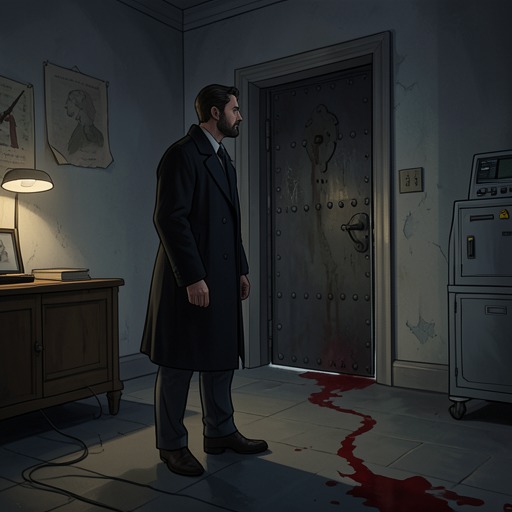
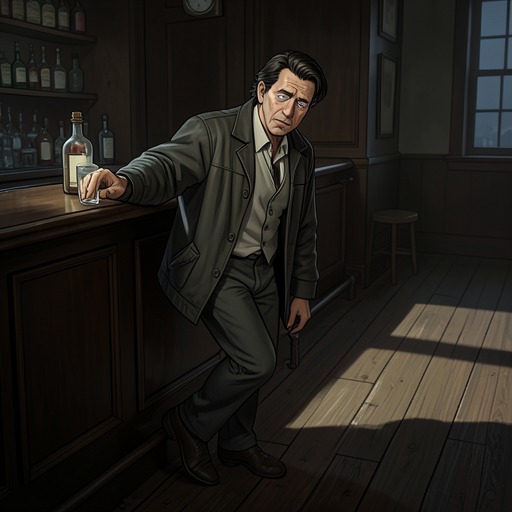
Der goldene HandschuhFiete Honka’s alcohol dependence is a recurring struggle between the ordinary life he hopes to build and a drinking pattern that repeatedly overwhelms his plans. He sometimes treats beer as manageable and schnapps as the true danger, and briefly enforces a rule against drinking while on duty. But restraint remains fragile: boredom, opportunity, and the expectation that a normal person should be able to enjoy the weekend undo it. Later, drinking consumes his wages and helps turn his home into a place of neglect, coercion, and distorted perception.
Drinking and the promise of control
At one point, Fiete estimates that in the whole preceding week he has drunk no more than ten beers and a few glasses of Korn. He is considering a Saturday visit to The Golden Glove Tavern, but distrusts his ability to stop himself once there. He fears staying all night, losing Sunday, drinking or finding a woman, and then being unable to report for work on Monday. A brief week of normality, he recognizes, cannot erase the many years before it.
He imagines that his brother Siggi could serve as an external limit: Siggi would keep the evening from getting out of hand, decide when it was time to leave, and ensure that Fiete drank only beer. Fiete’s distinction between beer and schnapps is itself a form of bargaining. He regards schnapps as the drink that burns and makes a person go mad, while convincing himself that beer cannot have the same effect, however much is consumed. Rather than decide for himself, he plans to let Siggi’s presence determine whether he goes out at all.
Work, abstinence, and relapse
Fiete later sets a stricter rule, drinking nothing during his shifts. He keeps to it for several weeks and tries to arrange his life through a series of planned activities. The rule breaks on July 13, Helga Denningsen’s birthday. Her husband, Erich, visits her at work and invites Fiete to join them. Fiete initially refuses alcohol, then accepts a bottle of Holsten beer, another, and Hohe Klasse brandy. With drinks, dice, a radio, joking, and music, the working night becomes an unusually sociable occasion; Fiete sees Helga dressed differently from how he knows her as a cleaner and turns his attention toward her.
After the Denningsens leave near midnight, Fiete begins his first patrol. He hurries around the premises, exerting himself in an attempt to sweat out the alcohol, and comforts himself that his superiors are unlikely to find out. The next day, guilt brings a renewed promise to let the incident stand as a single lapse. Yet the shift now seems unbearably dull, and the remaining half-bottle of Hohe Klasse and a few beers are close at hand. He puts off the first drink until midnight, then empties what remains.
The immediate consequence is a severe hangover on the day he has planned to visit the zoo. He nevertheless forces himself to make the trip, getting lost on the way and taking two hours to reach his destination. His resolve survives, but only as effortful self-command: even an outing he has anticipated must be carried through while he is physically suffering from the previous night’s drinking. The episode follows a recognizable sequence—rule, exception, remorse, renewed resolve, and another surrender—without establishing lasting control.
Escalation and its costs
Later, the scale of the drinking changes sharply. During some shifts Fiete drinks an entire bottle of Korn and becomes so intoxicated that he cannot even make it to The Golden Glove Tavern afterward. His wages go on alcohol and prostitutes; food becomes a nuisance, and he describes everything else as mattering little. Drinking is no longer an isolated breach of a work rule or a weekend indulgence. It now organizes his spending and contributes to the collapse of the working routine he had tried to protect.
Helga’s rejection deepens his distress. Fiete had imagined that she could save him and that he would have done anything for her; after the incident, she resigns without giving a reason. He is relieved that she is gone, but the loss does not restore his earlier hopes. His account of himself shifts toward a settled conviction that he will never have a normal woman, while his hatred of women grows and his sexual fantasies become increasingly violent and grotesque.
That escalation is presented alongside a memory of an earlier assault: after finding work on another farm, Fiete recalls being robbed, forced to drink Wermutwein, and raped by a man while two women held him down. He explicitly turns toward revenge for that experience and for everything he believes has been done to him. The narrative places this wish for revenge beside his worsening drinking, but does not make alcohol the sole cause of his fantasies. In the gatekeeper’s booth he reads cheap Western novels and fondles his revolver; elsewhere in the same episode, he imagines extreme bodily violence, chews raw meat to taste blood, and buys a sex doll for 65 marks. The details show a widening disorder of appetite and thought, not a return to the limited restraint of his earlier plan.
Drinking with Anna
The pattern reaches a further stage when Anna is living in Fiete’s apartment. After waking one afternoon, he notices that one of two bottles is nearly empty and assumes she has consumed a huge quantity of alcohol. He offers her bread with several possible toppings, but she refuses it. Fiete decides that he must get rid of her, imagining he will tell her on Monday that he cannot support someone who spends the day drinking. Yet he cannot bring himself to make her leave. Each day, he says, her look makes him give way, and the delay continues from Monday through Thursday.
On the Sunday, Fiete is still drunk and goes to a kiosk to buy three more bottles of Korn and cigarettes. Together with the bottle already at home, he thinks the four bottles should be enough for the day. He calls this condition something beyond ordinary Schmiersuff, while continuing to drink. The self-description marks how far his condition has moved beyond the earlier calculation that a few beers could be kept under control.
After nearly a week with Anna in the apartment, Fiete becomes convinced that she must be dead, imagining that she has starved or dried out. He says he has never seen her drink water and begins planning to move her body to a vacant factory site, believing nobody knows she has been staying with him. But this is his intoxicated assumption, not a confirmed death: when he returns, Anna is there, dressed in discarded women’s clothes and throwing glasses and dishes against the wall. The episode ends on that collision between his certainty and the visible reality of her presence. Drinking has not merely occupied the day; it has impaired his grasp of what is happening inside his own home.